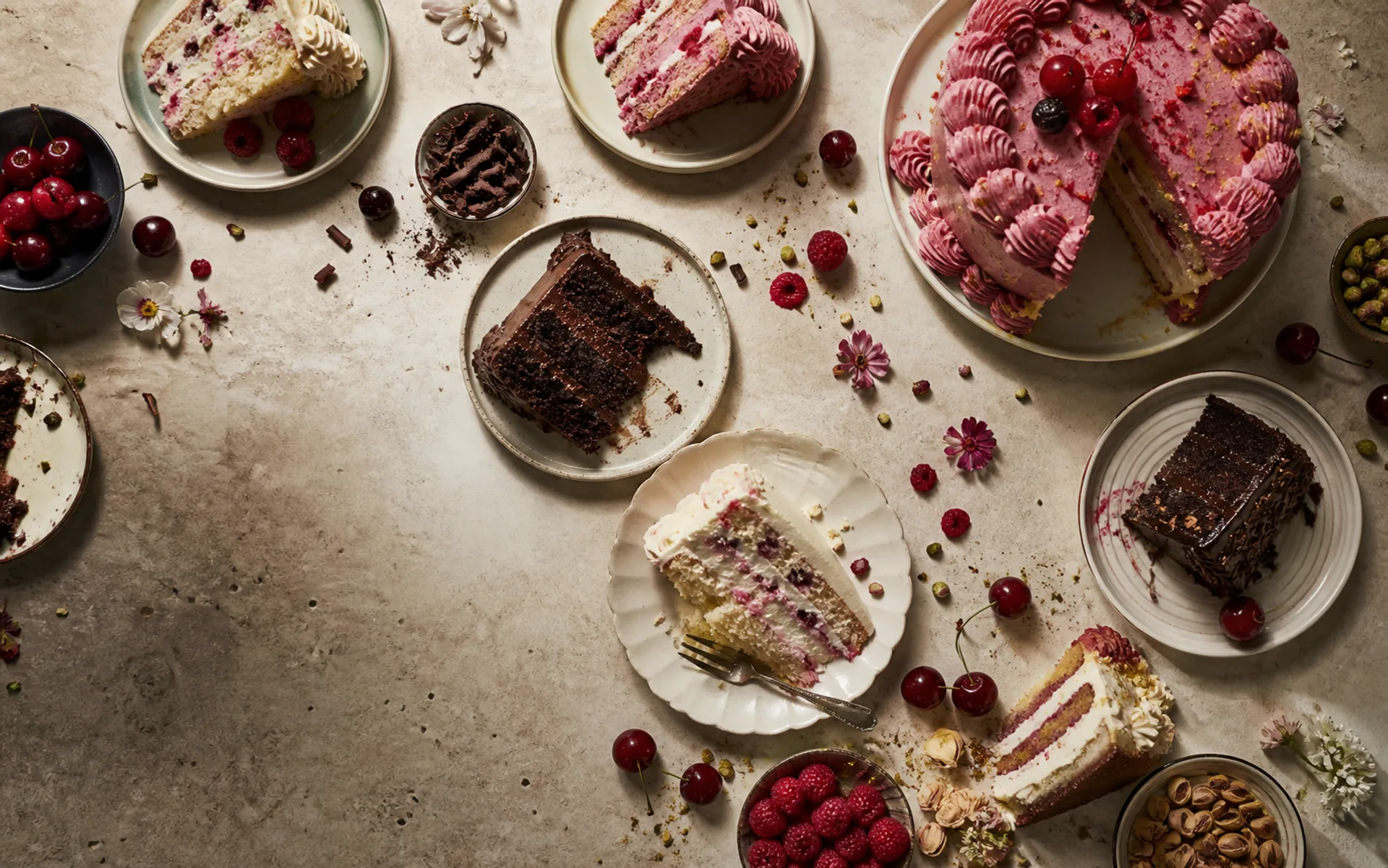
A custom cake is part dessert, part centrepiece and part logistics. It has to suit the occasion, serve the people invited and arrive in good condition. Sharing a few practical facts early gives a cake maker the context needed to recommend an appropriate size, finish and handover plan.
In short: Begin with your event date, handover time, guest count, venue conditions, preferred flavours, visual direction, realistic budget range and any dietary concerns. Then ask what is available and what the quote includes.
When should you enquire about a cake?
Enquire once the celebration date is reasonably firm. Availability depends on the baker's existing schedule, the scale of the cake and the amount of custom work involved. A small, simply finished cake and a multi-tiered design with handmade details do not require the same production plan.
There is no universal lead time that fits every cake maker or every season. Weekends, wedding periods and public-holiday weeks can fill earlier. If your date is close, it is still worth asking—but be ready to choose from designs and flavours that can be produced within the remaining time.
Eight details that make an enquiry easier to answer
1. The date and the real handover time
Give the date guests will eat the cake and the time you need to receive it. These may not be the same if a venue requires early setup. Mention whether you are collecting it, sending another person or asking about delivery. An exact handover window is more useful than “morning” or “evening”.
2. The occasion and venue
A birthday lunch at home, a hotel reception and an outdoor garden celebration place different demands on a cake. Say whether the display area is indoors, air-conditioned, shaded or outdoors, and how long the cake is expected to remain on display. In Sri Lanka's warm conditions, this can influence the recommended finish, decoration and setup timing.
3. Guest count and how the cake will be served
Share the expected number of servings rather than asking only for a cake “in two tiers” or “about this size”. Also explain whether cake is the main dessert, one item on a dessert table or a ceremonial cutting cake supported by additional portions. That distinction helps a baker plan quantity without making the display larger than it needs to be.
4. Your budget range
A useful budget is a range, not a test. It helps the baker direct the design towards the right scale and level of detail. Cake price can reflect size, ingredients, structural work, finish and the time needed for handmade decorations—not simply the number of tiers.
If the first concept exceeds the budget, ask which element is driving the cost. A smaller arrangement, a different finish or fewer handmade details may preserve the mood of the design without attempting to copy every feature.
5. Flavour preferences
Describe what the guest of honour enjoys: rich chocolate, fruit-led flavours, something light, or a less-sweet profile. If the cake has multiple tiers, ask whether flavour combinations are possible. Remember that a filling suitable for prompt, chilled service may need more careful handling than a simpler cake intended for a longer journey.
6. Allergies and dietary requirements
Raise ingredient concerns before confirming the order. Be specific about the ingredient and whether the request relates to an allergy, an intolerance, a dietary practice or a preference. Ask directly about ingredients and cross-contact; do not assume that “eggless”, “nut-free” or another label guarantees an allergen-free preparation area.
7. Design references—and what you like about them
Two or three relevant images are often more useful than a folder of twenty. Add a sentence explaining the part you like: perhaps the restrained colour palette, asymmetrical florals, piped texture, typography or overall mood. The goal is to communicate direction, not demand an exact copy of another maker's work.
8. Collection, delivery and setup details
If transport is involved, share the destination and access information. For a venue, note the setup time, loading or parking constraints, stairs and the location of the cake table. Ask who is responsible for final placement, adding flowers or toppers, and moving the cake after handover.
Plan portions before choosing the silhouette
Online serving charts are only a starting point. Portion yield changes with the dimensions of each tier, cake height and the way slices are cut. A dramatic tall cake can look generous while still needing a deliberate cutting plan.
Tell the baker how many portions you need and let them translate that into suitable dimensions. If a particular tiered appearance matters, ask whether the visible cake can be combined with additional kitchen portions. Also identify who will cut the cake at the venue and whether they need a cutting guide.
A simple serving conversation
- How many adults and children are expected?
- Will another dessert be served?
- Do you want small event portions or larger dessert portions?
- Will some cake be saved for absent family or taken home?
- Who will cut it, and do they understand the tier structure?
How to build a design brief without over-directing
A strong brief defines the feeling and the boundaries, while leaving room for the maker's judgement. Start with the invitation, outfit, flowers or venue styling if those choices already exist. These references are more personal than a trending cake image and can lead to a result that belongs to your celebration.
Choose three design words—such as “soft, botanical, minimal” or “joyful, graphic, colourful”. Then list your non-negotiables and what the maker may interpret freely. Mention any topper, candle or fresh-flower plans early so weight, food contact and placement can be considered.
“The celebration is on [date], and the cake is needed at [time]. We expect about [guest count] people at an [indoor/outdoor, air-conditioned/non-air-conditioned] venue. We like [flavours] and the [specific details] in these reference images. Our preferred budget range is [range]. Please advise what size and finish would suit, and whether collection, delivery or setup is available.”
What to check before confirming the order
Policies vary between cake makers, so rely on the written quote or order summary for your specific booking. Check the final design description, size or serving estimate, flavours and fillings, message spelling, handover details and total cost. Confirm what is included—such as a board, box, topper, delivery or setup—and what is not.
Read the payment schedule, final-change deadline and cancellation or postponement terms. If the cake will be received by a friend, driver or venue team, make sure that person has the handover time, storage instructions and a suitable vehicle.
Copy-and-send cake enquiry checklist
- Celebration date: including the year
- Required handover time: and venue setup time, if different
- Occasion and venue: including indoor, outdoor and air-conditioning details
- Guest count: plus how cake will be served
- Flavour direction: favourites and dislikes
- Dietary concerns: stated clearly and specifically
- Design direction: a few references and the details you like
- Budget range: so recommendations can be realistic
- Handover: ask about collection, delivery and setup options
Common cake-ordering questions
How early should I order a custom cake?
Ask as soon as the date and basic plan are known. Availability varies by maker, complexity and season, so a direct enquiry is more reliable than a universal lead-time rule.
Do I need a final guest count before enquiring?
No. Give your best estimate and ask when the final quantity must be confirmed. Flag any likely change rather than ordering for a number you already know is uncertain.
Can a cake maker recreate a reference photo exactly?
Reference photos are best used to explain mood, colours and techniques. Ingredients, tools and each maker's creative style differ, and an original interpretation will feel more personal to the event.
What should I say about an allergy?
Name the specific allergen and explain that it is an allergy. Ask about ingredients and the risk of cross-contact before ordering; only proceed if the preparation arrangements meet the person's needs.
Ready when you are
Turn your notes into a cake brief.
Bring the date, guest count and the ideas that matter most. We can start the conversation from there.
Plan a cake