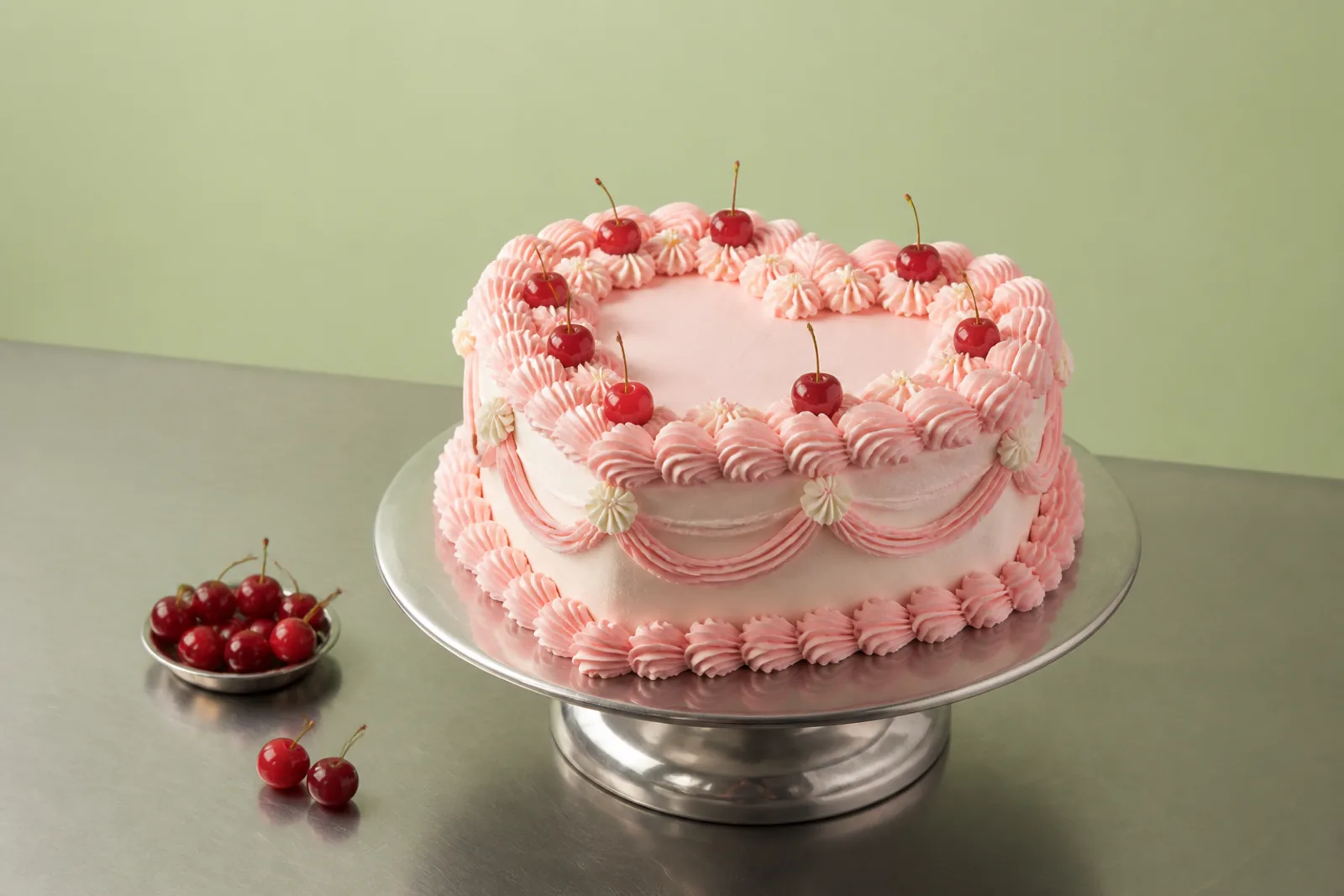
The correct storage method depends on the complete cake—not only whether the outside is buttercream or fondant. Fillings made with cream, custard, cream cheese, mousse or cut fruit can need tighter temperature control than a different recipe. Always keep the maker's instructions with the box and follow them for that specific order.
In short: Pre-cool the car, carry the box on a flat non-slip surface, drive directly, keep the cake away from sun and have its approved storage space ready. If the maker says it must be refrigerated, preserve that cold chain until the planned display time.
The first rule: ask about this cake
Generic advice cannot account for every sponge, filling, frosting and decoration. Before leaving with the order, ask four questions: Does it need refrigeration? When should it come out? How long may it be displayed in the expected conditions? How should leftovers be stored?
Write the answers down or photograph the care card. If someone else is collecting, send the instructions to that person and to whoever will receive the cake at the destination.
Food-safety baseline
Sri Lanka's Food (Hygiene) Regulations specify cold holding at no more than 4°C for readily perishable cooked food in food establishments, with limited exceptions for preparation and service. Consumer guidance from FoodSafety.gov likewise advises a refrigerator at 4°C or below and says perishable food should not remain unrefrigerated for more than two hours—or one hour when exposed to temperatures above 32°C.
Those are safety limits, not targets for a cake display. Decorations can deteriorate sooner, and the right instruction may be more cautious. When the recipe is unknown, ask the maker instead of guessing from appearance.
Prepare before cake collection
The easiest journey begins before the box enters the vehicle. Clear a level area large enough for the cake board and box. Place a clean non-slip mat there, remove loose items that could slide into it and pre-cool the air-conditioned cabin.
At the destination, measure the refrigerator shelf if chilling is required. Remove strong-smelling foods and make space without asking anyone to shift the cake later. For a tall or tiered order, confirm the box dimensions with the maker rather than assuming a household shelf will fit.
Collection kit
- A clean, flat, rigid area in the air-conditioned part of the vehicle
- A non-slip mat larger than the cake box
- Clear directions and enough fuel for a direct trip
- The recipient's contact details and access instructions
- A prepared refrigerator or cool holding area, if instructed
How to transport a cake by car
Use a flat surface
Car seats tilt and a person's lap moves with every turn. Place the box on a level, supported surface in the air-conditioned cabin, using the non-slip mat to reduce sliding. Keep it upright; do not stack bags or decorations on top. Ask the maker for placement advice if the box is unusually tall or the cake has been designed for assembly at the venue.
Keep the vehicle cool
Run the air-conditioning before loading. Position the box away from direct sunlight and avoid a closed boot that becomes hot or receives no cooled air. Sun through a window can warm one side of the cake even when the cabin feels comfortable.
Drive as though the box is open
Accelerate gradually, leave more braking distance and take corners slowly. Choose the smoothest practical route, not automatically the shortest. Speed humps, broken surfaces and abrupt lane changes transfer force through the cake's internal structure.
Go directly to the destination
Do not leave a cake in a parked vehicle, even for a short errand. A car can heat quickly, and restarting the air-conditioning does not undo softening or an interrupted cold chain. Arrange for another person to handle doors and directions when possible.
What to do on arrival
- Confirm the table or refrigerator is ready before unloading.
- Carry the box from beneath with two hands; do not squeeze its sides.
- Move slowly and keep the board level through doors and stairs.
- Place it in the instructed storage area immediately.
- Do not open the box repeatedly to show guests or check decorations.
For a venue handover, identify the person accepting responsibility and share the care instructions. A cool arrival is not enough if the box is then left near a window, kitchen door, spotlight or outdoor setup area.
How to refrigerate a decorated cake
If refrigeration is required, keep the cake in its box unless the maker instructs otherwise. The box offers some protection from accidental contact, refrigerator odours and moving moisture. Set it on a stable shelf with clearance above and around decorations.
Do not force a box into a space that bends its sides, and do not put heavy food on top. Avoid frequent door opening. A refrigerator crowded with warm dishes may take longer to return to its set temperature, so prepare the space in advance.
Freezing is not a last-minute substitute for refrigeration. Some sponges freeze well under planned conditions, but completed decorations, fillings and fruit may not thaw attractively or evenly. Freeze a finished cake only when the maker has given instructions for it.
What to do when a cold cake “sweats”
Condensation can form when a chilled surface meets warm, humid air. On fondant it may look glossy or feel sticky; on coloured buttercream it can leave visible droplets. This does not necessarily mean the cake has failed.
Leave the surface alone. Wiping, blotting or touching can create marks and transfer colour. Keep the cake boxed during the initial transition if that matches the maker's guidance, position it in the coolest suitable room and let moisture dissipate gradually. Avoid directing a strong fan at delicate decorations.
Display, serving and leftovers
Coordinate photography and ceremonial cutting so the cake is not displayed longer than needed. Outdoors, use a solid table in full shade, away from reflective walls and direct sun. Check that the table is level and protected from wind, rain, insects and guests brushing past.
Before cutting a tiered cake, ask about dowels, central supports, boards and non-edible decorations. Remove toppers, wires, flower barriers and structural pieces as directed. Use a clean knife and a cutting plan appropriate to the cake's dimensions.
Return perishable leftover portions to refrigeration promptly in covered containers. Follow the maker's advice for shelf life because filling and storage history matter. If a perishable cake has exceeded safe time or temperature limits, do not rely on smell or appearance to decide it is safe.
Common storage and transport questions
Should every decorated cake go in the fridge?
Not automatically. The answer depends on the filling, frosting, decorations and recipe. Ask the maker and follow the written care instructions for your order.
Can I carry a cake on the car seat or on my lap?
A seat is angled and a lap is unstable. A flat, rigid surface with a non-slip mat in the cooled cabin is generally a better transport setup, subject to the maker's instructions.
Can a fondant cake be refrigerated?
Many can, but humidity and condensation need to be managed. The filling may also require refrigeration. Ask how that particular finish should be chilled and brought to serving condition.
How long can cake stay outside at a party?
There is no single answer for all cakes. Ask based on the filling and expected temperature. As a general safety ceiling, official guidance limits unrefrigerated time for perishable food to two hours, reduced to one hour above 32°C; the decorative finish may need a shorter display.
What if the journey is long?
Share the route and travel time before ordering or collection. The maker may recommend a different finish, additional chilling, separate decorations, venue assembly or another handover arrangement.
A smoother handover
Plan the cake and the journey together.
Tell us about the date, venue and travel conditions when you enquire, so practical care can be considered alongside the design.
Start your cake enquiry