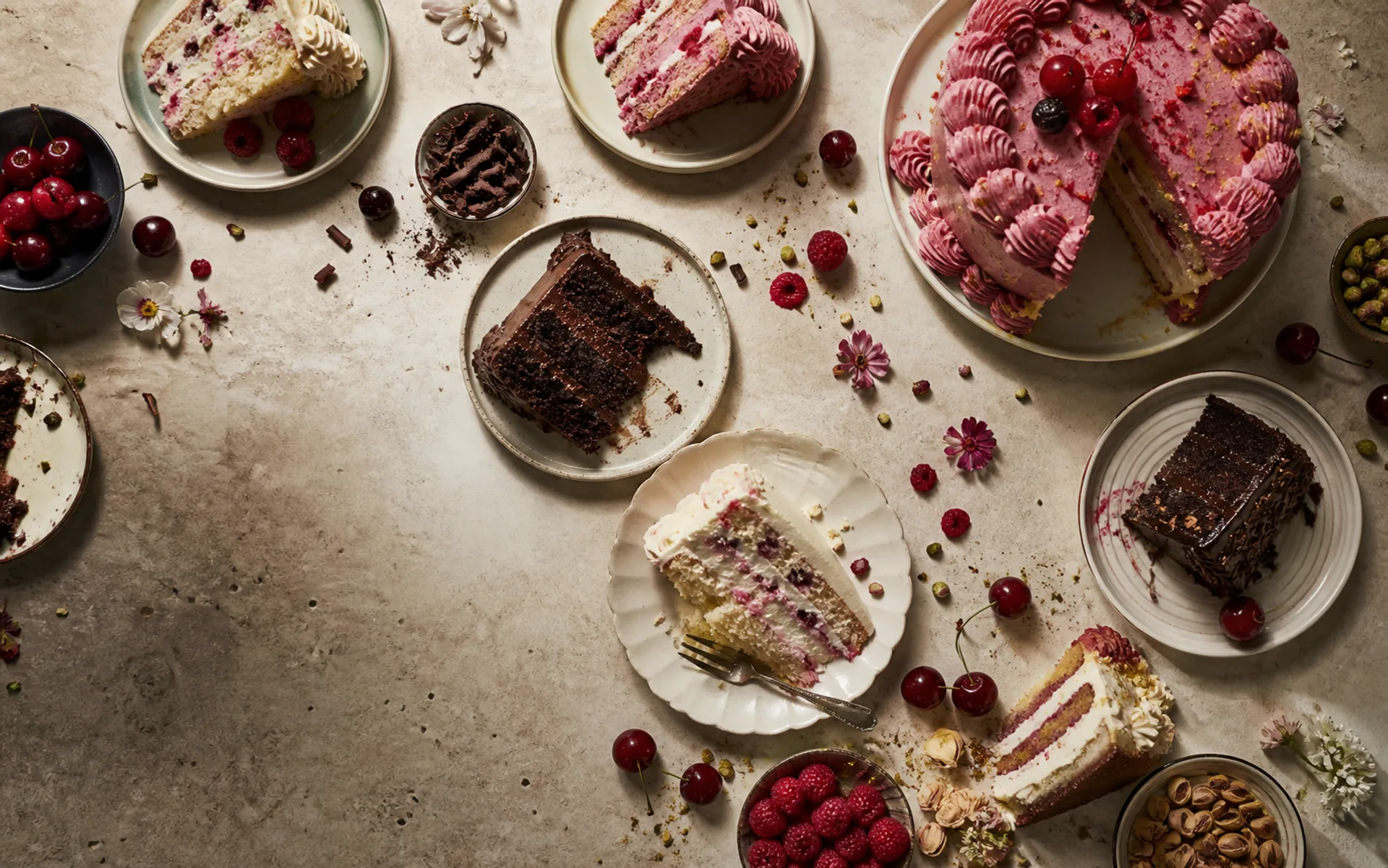
The right cake size is the one that fits the way your celebration will serve it. Two events with 30 guests may need different amounts: one may finish dinner with generous plated slices, while the other may offer smaller pieces beside several desserts.
The useful answer is a range, not a promise. Serving charts help with early planning, but your confirmed yield must come from the dimensions, height, recipe, structure and cutting method of the cake actually being made.
Start with people, not inches
Before choosing a diameter or asking for a particular number of tiers, write down who the cake needs to serve and how it will reach the plate. This turns an abstract guest count into a much more useful brief.
How many people are likely to eat cake?
Begin with the expected attendance, then consider whether every guest is likely to take a portion. Include children, event suppliers or family members receiving takeaway pieces if you want cake reserved for them. If the count is still changing, say that it is an estimate rather than hiding the uncertainty.
Is cake the main dessert?
A cake served as the only dessert is often cut more generously than one shared alongside ice cream, cupcakes, fruit or a full dessert table. Tell the maker what else will be available. That context is more useful than asking for the largest possible yield from a small cake.
What should one portion feel like?
A larger dessert portion suits seated service and guests who expect a full slice. A smaller event portion can work when cake is one taste among several. Neither style is automatically correct; the important point is to agree which one your estimate assumes.
Approximate round-cake serving table
The table below is a deliberately broad planning reference for a single round cake around 8–10 cm tall. It assumes the cake is cut evenly with a suitable grid or ring method. It is not a product specification, quote or guaranteed yield.
| Round diameter | Approx. larger dessert portions | Approx. smaller event portions | Useful for early planning |
|---|---|---|---|
| 4 in / 10 cm | 4–6 | 6–8 | A small shared moment or compact top tier |
| 5 in / 13 cm | 6–8 | 8–12 | A small gathering or part of a tiered design |
| 6 in / 15 cm | 8–12 | 12–16 | An intimate celebration |
| 7 in / 18 cm | 12–16 | 16–22 | A small-to-medium gathering |
| 8 in / 20 cm | 16–22 | 22–28 | A medium gathering |
| 9 in / 23 cm | 20–28 | 28–36 | A medium celebration with a wider cake |
| 10 in / 25 cm | 26–34 | 36–44 | A larger gathering or lower tier |
| 12 in / 30 cm | 38–48 | 50–60 | A larger event or substantial base tier |
Read this before using the numbers
- The ranges are approximate and intentionally not exact.
- A shorter cake may produce fewer portions; an extra-tall cake may require a different cutting method.
- Square, rectangular, heart-shaped and sculpted cakes do not follow the same yield.
- Supports, central dowels, deep trimming or a design with an irregular outline can affect usable cake.
- Always use the serving estimate confirmed for your individual Cake By Dinusha order.
Six details that change the real yield
1. Portion width
A small change in slice width becomes a large difference across a whole tier. Venue staff, family members and caterers may all cut differently unless they receive a clear portion plan.
2. Finished height
A tall layer cake can make a narrow slice feel generous, while a shorter cake may need a wider piece. Some very tall cakes are divided horizontally before cutting. Ask how the intended cake should be portioned rather than applying a chart blindly.
3. Shape
Square and rectangular cakes can often be divided into a regular grid, while round and heart-shaped cakes need a different pattern. Sculpted outlines can create offcuts or sections that are not equal in size.
4. Structure and decoration
Tier supports, dowels, internal boards and very detailed shapes affect where cuts can be made. Decorative elements may need to be removed before service. The person cutting the cake should know what is edible and what is structural.
5. Recipe and filling
A rich, dense cake may feel satisfying in a smaller portion than a light sponge. Soft fillings can also influence the most practical slice shape. Browse the planned cake flavours and fillings guide, then ask what serving style suits the flavour you choose.
6. The cutting person
A chart cannot help if the first pieces are cut without a plan. Decide whether the venue, caterer or a family member will serve the cake, and pass on any order-specific cutting guidance before the celebration begins.
Shape, height and weight are not interchangeable
It is tempting to convert every cake into one familiar measure, but diameter, height and weight describe different things. A 1 kg cake does not always serve the same number of people because recipes, fillings, syrup, decoration and layer proportions have different weights.
For the same reason, two cakes that look equally wide in photographs may have very different heights and yields. Perspective can make the comparison even less reliable. Use inspiration images to explain the silhouette you like, then use guest count and portion style to discuss the size.
When someone asks, “How many servings in 1 kg?”
Answer with context: the recipe, finished dimensions and intended slice size are still needed. Weight alone cannot provide a dependable guest count. Ask for the serving estimate attached to the exact cake option you are considering.
How to think about tiered cakes
A tiered cake is both a serving plan and a visual composition. Its total yield normally comes from adding the portions in each edible tier, but the final calculation should account for the support system and how the tiers will be separated and cut.
Do not assume every visible tier is edible. Display tiers, separators or raised structures may be used in some cake designs, while other designs are entirely cake. Ask exactly which sections are edible and whether the top tier is intended to be served at the event.
If you love a tiered silhouette but need a different number of portions, ask what alternatives are suitable for that enquiry. An adjusted tier size or separate cutting portions may sometimes be discussed, but availability and suitability must be confirmed rather than assumed.
Planning a larger celebration? The dedicated wedding cakes in Ja-Ela page will help organise design, servings and venue context. For a playful milestone, visit birthday cakes in Ja-Ela.
Build a useful portion brief
You do not need to calculate the final cake dimensions yourself. Send the practical information below and let the size recommendation respond to the whole event.
- Expected attendance: your current best estimate
- Likely cake eaters: including children or takeaway portions
- Serving style: plated dessert, buffet pieces or part of a dessert table
- Other sweets: what will be served alongside the cake
- Preferred appearance: one tier, a tiered silhouette or an open recommendation
- Event setting: home, venue, indoor or outdoor
- Cutting plan: who is likely to portion and serve it
- Uncertainty: any guest-count changes you already expect
Add the celebration date, flavour direction and design references, then use the cake design brief guide to organise the creative details. The existing custom cake ordering article explains how to prepare the wider enquiry.
Questions to ask before confirming a size
- What portion style does this estimate use? Ask whether the count assumes smaller event pieces or larger dessert slices.
- What are the finished dimensions? Diameter and approximate height communicate more than a photograph alone.
- Are all tiers edible? Confirm what contributes to the serving count.
- Is there a recommended cutting method? Make sure the person serving the cake receives it.
- Should we plan extra portions? Mention uncertain attendance, takeaway pieces and whether cake is the only dessert.
Cake size and serving FAQs
How many people does a 1 kg cake serve?
There is no dependable universal number. Recipe density, filling, decoration, height and slice size all affect both weight and yield. Ask for the serving estimate attached to the exact cake being discussed.
Should I order for every invited guest?
Use the expected attendance and explain how dessert will be served. Include any portions you want to reserve, and mention if the final count is uncertain so an appropriate range can be discussed.
Does a square cake serve more than a round cake?
A square cake of similar width can often be divided into more regular pieces, but height and portion dimensions still matter. Ask for the yield of the particular shape and size rather than applying a simple conversion.
Can I use the serving chart as my final order size?
No. Use it to prepare an early estimate. The final size and serving count should be confirmed for the chosen recipe, shape, height and design.
Where can I find more Cake By Dinusha answers?
Visit the planned cake ordering FAQ for a broader set of practical questions, or send your guest count and celebration details through the contact page.
Bring the guest count
Turn a serving estimate into a cake plan.
Share how many people you expect, how dessert will be served and the date you are planning. The final dimensions and availability can then be discussed for your enquiry.
Start your cake enquiry