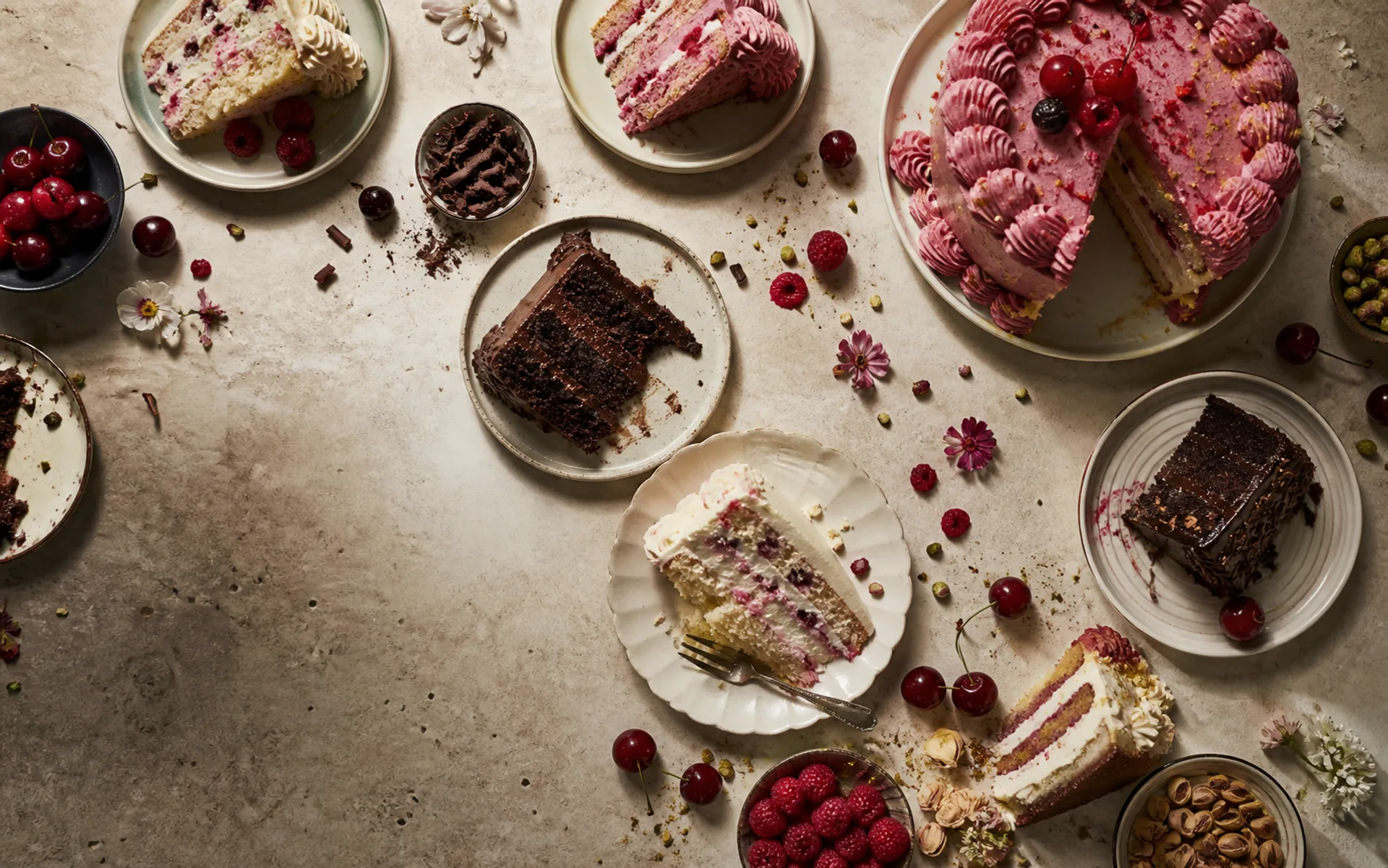
Think of the combinations on this page as conversation starters, not a Cake By Dinusha menu. Recipes, fillings, finishes, ingredient suitability and current availability must all be confirmed for the individual enquiry before you rely on a particular option.
Start with a feeling: light and bright, deep and chocolatey, warm and aromatic, familiar and gentle, or rich with a sharp contrast. That description can be more useful than choosing three components separately.
Interactive flavour finder
Describe the bite you want
Choose a flavour profile and finish mood to create a useful direction to discuss. The result is inspiration only; current components and combinations still need confirmation.
A useful starting point is a familiar vanilla or chocolate-led direction with a balanced filling, considered with a smooth buttercream finish.
Ask about this directionBuild flavour in three connected parts
1. Sponge sets the foundation
The sponge establishes the main aroma, sweetness and structure of a slice. A lighter sponge can leave space for a vivid filling, while a darker or more strongly flavoured sponge may benefit from a cleaner contrast. Density matters too: a delicate crumb and a substantial filling can feel very different from two rich layers together.
2. Filling creates contrast or continuity
A filling can echo the sponge, add creaminess, introduce fruit-like acidity or bring a deeper caramel or chocolate note. It also affects moisture, refrigeration and transport. The words “fruit filling,” for example, can describe many preparations with very different textures, so ask what is appropriate for the proposed cake rather than assuming a specific recipe.
3. Finish shapes the final forkful
The outer layer contributes sweetness, richness and texture as well as appearance. Buttercream, ganache-style finishes, sugar-paste details and other decorative approaches behave differently, but no finish should be assumed available from this guide. The agreed exterior needs to work with the flavour, design and handling plan.
Flavour-pairing inspiration
The table below shows conceptual directions that can help you describe what you enjoy. Every sponge, filling and finish is an example only. Ask which components can be offered together for your date, cake size and design.
| Flavour direction | Possible sponge idea | Possible filling idea | Possible finish mood | Balance to discuss |
|---|---|---|---|---|
| Light and bright | Vanilla-style or citrus-style sponge | Berry-led or citrus-led layer | Clean, light-coloured finish | How much acidity and sweetness you enjoy |
| Deep and rich | Chocolate-style sponge | Chocolate-led or caramel-led layer | Dark, glossy or textured finish | Whether a sharper contrast would keep the slice balanced |
| Warm and aromatic | Vanilla-style or gently spiced sponge | Caramel-led or fruit-led layer | Soft neutral tones and simple piping | Which spice notes should lead and which should stay subtle |
| Coffee-house inspired | Coffee-style or chocolate-style sponge | Coffee-led, chocolate-led or caramel-led layer | Minimal finish with deeper colour accents | Preferred coffee intensity and overall bitterness |
| Tropical and fresh | Vanilla-style or coconut-style sponge | Mango-, passionfruit- or pineapple-inspired layer | Bright colour or restrained natural palette | Ingredient availability, moisture and refrigeration needs |
| Familiar and gentle | Vanilla-style or chocolate-style sponge | A matching cream or mild fruit-led layer | Classic smooth finish or simple piping | Guest preferences and the sweetness level you want |
Examples are not availability promises
Fruit, dairy, chocolate, coffee, coconut, caramel, colourings and decorative ingredients can all have recipe, sourcing, storage or dietary implications. Confirm the complete combination and any ingredient concerns directly before placing an order.
Five ways to make a slice feel balanced
Use contrast with purpose
A rich sponge can feel clearer with a tangy or less-sweet element, while a subtle sponge can carry a more expressive filling. Contrast does not have to mean sharpness; it can also come from texture, aroma or a small touch of salt.
Count every sweet component
Sponge, filling, outer finish, drip, toppers and decorations may all contribute sweetness. A reference image shows the outside but says little about the eating balance within. If you prefer desserts that are less sweet, say so at the beginning and ask what can realistically be adjusted.
Think about texture
Soft sponge and smooth cream create a gentle bite. A crisp, chewy, chunky or crunchy inclusion changes the experience and may introduce allergens or handling considerations. Describe the texture you like, then confirm what is suitable for the cake rather than requesting an unverified component by name.
Let one note lead
A cake can contain several flavours without making them equally strong. Decide what guests should notice first and what should support it. “Chocolate first, with a quiet coffee note” gives a clearer direction than a long list with no hierarchy.
Keep the visual brief connected
Strong colours, sculptural elements and particular finishes can influence the ingredients and amount of coating used. Share both the flavour priority and design references so one part of the brief does not accidentally work against the other.
Match the flavour direction to the occasion
The safest crowd-pleaser is not the same for every group. Consider the person being celebrated, the other food being served and whether the cake is the main dessert or one item on a larger table. A familiar flavour direction may suit a mixed-age gathering, while a smaller celebration may invite a more distinctive combination.
Serving style matters as well. Dessert-sized portions after a full meal feel different from generous slices served with tea. Share your estimated guest count and how you expect the cake to be served; that context can inform both size and richness.
If more than one cake or tier is being discussed, ask whether different flavours are practical for the proposed structure and portions. Do not assume every tier can or should be different before the full design has been considered.
Include warm-weather handling in the flavour choice
Fillings vary in how they need to be chilled and how they behave during a journey or display. Sri Lanka's heat and humidity can affect the filling beneath a finish as well as the decoration you can see. No flavour combination on this page should be treated as suitable for a warm room, outdoor table or long journey without order-specific advice.
Tell Cake By Dinusha about the event location, expected transport and whether suitable refrigeration or an air-conditioned space will be available. Collection or delivery arrangements, if applicable, are confirmed individually. For general preparation, read the cake storage and transport guide and the buttercream and fondant comparison.
Dietary and allergen enquiries need a separate conversation
Flavour names do not provide enough information to decide whether a cake is suitable for a dietary preference, intolerance or allergy. Recipes and branded ingredients can contain or come into contact with milk, eggs, wheat, gluten, nuts, peanuts, soy or other allergens, and decorative elements may add further ingredients.
Share every relevant dietary or allergen concern before an order is confirmed, including whether the concern is a preference, intolerance, diagnosed allergy or another medical requirement. Ask what ingredient information and cross-contact limitations can be explained for the proposed cake.
Do not assume that an eggless-style, dairy-free-style, gluten-free-style, vegan-style or nut-free-style cake is available or safe based on a label alone. Current capability, exact ingredients, preparation environment and suitability must be discussed directly. Cake By Dinusha may not be able to accommodate every request, especially where severe allergy risk is involved.
Include these details in a dietary enquiry
- The ingredient or allergen of concern.
- Whether it is a preference, intolerance, allergy or medical requirement.
- The person who will eat the cake and the seriousness of the concern.
- Questions you need answered about ingredients or cross-contact.
- Your preferred date, servings and design, because a safe or suitable option cannot be assessed in isolation.
A useful flavour brief can be short
- Describe two or three flavours you usually enjoy.
- Say whether you prefer light, rich, fruity, chocolatey, aromatic or less-sweet desserts.
- Share any textures you particularly like or avoid.
- Include the occasion, date, estimated servings and event conditions.
- Send design references so flavour and finish can be discussed together.
- State dietary and allergen concerns clearly before confirmation.
You do not need to arrive with a finished recipe. A preference such as “chocolate-led but not too heavy” or “bright and fruity with a simple finish” gives the enquiry a thoughtful starting point. Cake By Dinusha can then confirm what is currently possible for the individual order.
Common flavour-planning questions
Are the flavour combinations on this page available to order?
They are inspiration only, not a live menu or availability list. Send the combination you are considering and confirm the sponge, filling, finish, ingredients and date directly before relying on it.
Can I request a cake that is less sweet?
You can describe that preference in your enquiry. Recipes and finishes vary, so ask what can be adjusted for the proposed cake rather than assuming a particular sweetness level can be guaranteed.
Can one cake include more than one flavour?
Ask with your preferred size and design. Whether multiple flavours are practical depends on the cake format, servings, structure and current options, and must be confirmed for the order.
Can I request fresh fruit, nuts or crunchy fillings?
You can ask, but these ingredients are not promised by this guide. Availability, storage, structure, texture and allergen implications all need to be considered before a component is agreed.
Bring a taste direction
Build the flavour around your celebration.
Share your preferred date, serving estimate, flavour mood, design references and any ingredient concerns. An enquiry begins the discussion; availability and final details are confirmed individually.