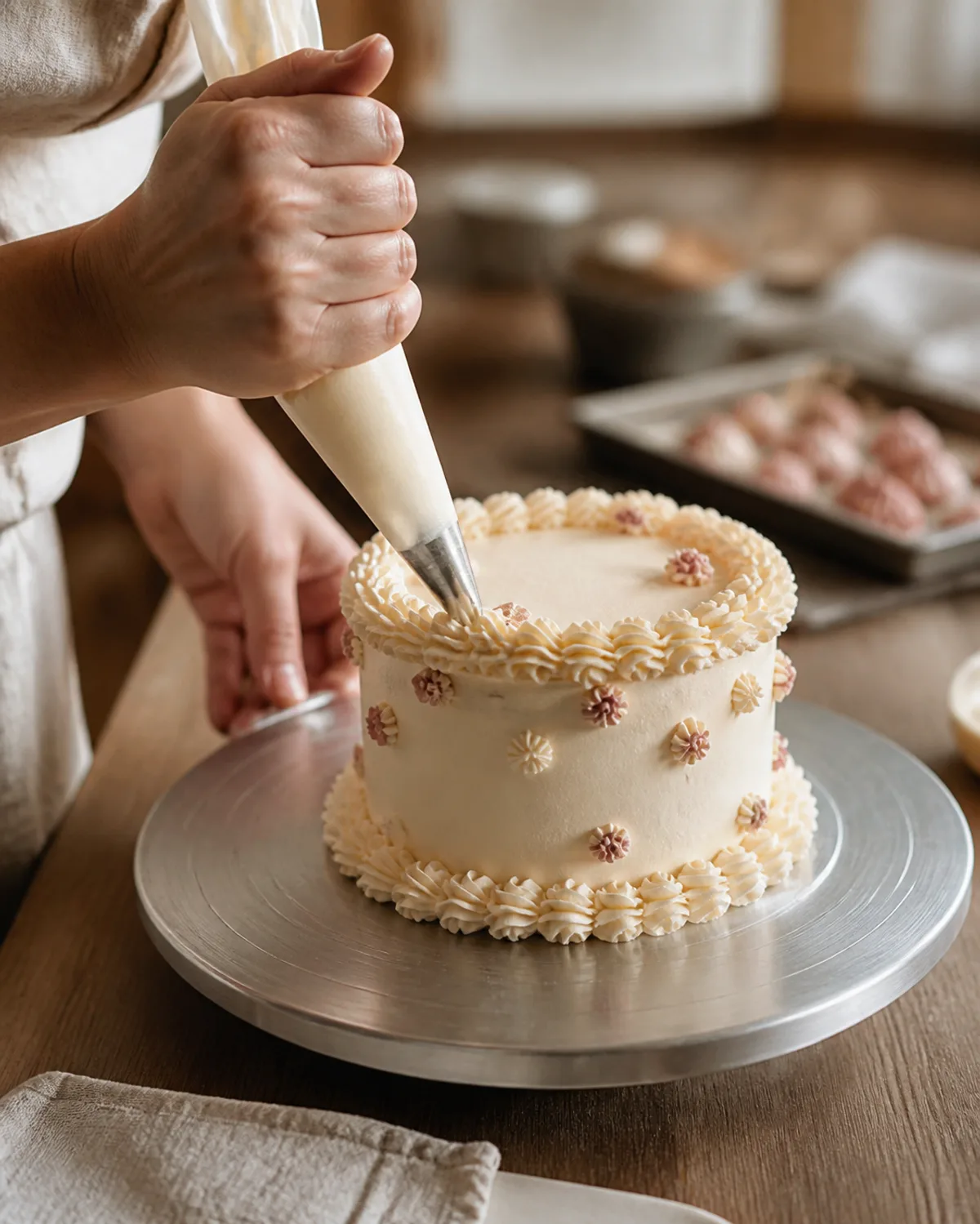
A cake design brief is not a list of instructions for reproducing another cake. It is a compact explanation of the celebration, the person at its centre, the visual feeling you want and the practical boundaries the finished cake must respect.
A strong brief creates direction without closing every door. Identify what matters most, explain why you chose each reference and allow the final combination of colour, proportion and handmade detail to be interpreted for your own celebration.
What a useful design brief should do
The purpose of a brief is shared understanding. It should help Cake By Dinusha see the connection between the event, the person and the aesthetic, while also revealing any details that affect what can be made and handled sensibly.
A concise brief answers four questions:
- Who and what is being celebrated?
- What should the cake feel like when it enters the room?
- Which visual details are essential, and which are only inspiration?
- What practical facts shape the design?
The brief is one part of a wider enquiry. Date, servings, flavour, availability, final price and handover details still need their own discussion. Use the existing custom cake ordering article to prepare those practical details.
Begin with the occasion and the person
A design becomes personal when it reflects more than the age written on top. Introduce the person or couple in a few useful lines. You do not need a biography; choose details that can influence colour, mood, symbolism or style.
For a birthday
Think about personality before theme. Is the person energetic or understated, playful or polished, nostalgic or modern? A hobby can be represented literally, but it can also appear through a colour, pattern or small symbolic detail. The planned birthday cakes in Ja-Ela page will offer more occasion-specific starting points.
For a wedding
Use the visual language already present in the celebration: invitation typography, flowers, fabrics, jewellery, table styling or the venue architecture. Choose the elements that feel most connected to the couple rather than trying to reproduce every decorative decision on one cake. Continue with the planned wedding cakes in Ja-Ela guide.
For another milestone
Graduations, anniversaries, welcomes and family gatherings can each begin with a story, place, achievement or shared memory. If the occasion has no obvious visual theme, describe how you want people to feel: warm, joyful, elegant, surprising or quietly meaningful.
Useful personal cues
- A favourite colour used often in clothing or home details
- A flower, fruit, pattern or place with personal meaning
- A design era the person genuinely enjoys
- A hobby that can be suggested without becoming a novelty prop
- A phrase or private reference that guests will recognise
Choose three mood words
Three well-chosen words can resolve a surprising number of design decisions. They provide a filter for references that otherwise pull in different directions.
Try combinations such as:
- Soft, botanical, restrained
- Joyful, graphic, playful
- Romantic, vintage, detailed
- Modern, sculptural, calm
- Warm, nostalgic, handmade
Avoid choosing words that contradict one another unless you explain the balance you want. “Minimal and highly ornate” could mean a clean cake with one richly detailed focal area, but without that explanation it creates two competing briefs.
Turn vague adjectives into useful direction
Words such as “simple”, “luxury” and “cute” mean different things to different people. Add one line of interpretation. “Simple” might mean a limited palette and plenty of open space, while “luxury” might mean precise finishing and thoughtful proportion rather than covering every surface with decoration.
Edit your inspiration images
A large folder can make the direction less clear. Select a small group of references that each have a job. They do not all need to be cake photographs: an invitation, fabric, bouquet, room or piece of art can communicate a more personal visual language.
| Reference | What it can communicate | What to write beside it |
|---|---|---|
| Cake photograph | Silhouette, piping, finish or detail placement | Point to the exact feature you like, not “all of this” |
| Invitation or stationery | Typography, line work and formality | Name the motif or lettering quality worth carrying through |
| Flowers or outfit | Palette, softness and texture | Say which colours should lead and which should stay as accents |
| Venue or table styling | Scale, atmosphere and visual context | Explain where the cake will sit and what will surround it |
| Artwork or object | Pattern, shape, rhythm or personality | Describe whether the reference should feel literal or abstract |
Annotate each image
Beside every reference, finish the sentence “I like this because…”. You may love the colour but not the flowers, the piping but not the shape, or the asymmetry but not the finish. Those distinctions prevent the brief from being read as a request for an exact copy.
Remove repeated and conflicting images
If five references show the same bow detail, one or two are enough. If one image is dark and sculptural while another is pastel and delicate, decide whether they represent separate possible directions or a deliberate combination. Do not ask a single brief to resolve an unspoken decision.
Reference images are inspiration, not a specification
The final Cake By Dinusha direction should be discussed for your own occasion, serving needs and event conditions. Materials, proportions and details may need an original interpretation rather than duplication of another maker's work.
Build a palette with roles
A list of six colours is less useful than knowing how each colour should behave. Choose one or two leading colours, a supporting neutral and, if needed, one accent. The balance matters as much as the swatches themselves.
Use real references when accuracy matters
Colour names are unreliable: “sage”, “blush” and “champagne” cover wide ranges. Share a clear photograph or digital swatch from the invitation, outfit or flowers. Remember that screens, lighting and edible materials can change how a colour appears, so describe the desired relationship rather than promising an exact digital match.
Decide where the boldest colour belongs
A strong colour can cover the cake, appear in piping or stay within a few focal details. Explain whether you want the overall impression to be pale with one bright accent, evenly colourful or intentionally monochromatic.
Prioritise details and check every word
Design elements compete for attention. Rank them so the composition has a clear focal point. A useful brief separates three levels:
- Essential: the one or two details the cake would feel wrong without
- Preferred: elements that support the direction if they work with the design
- Open: areas where you welcome an original recommendation
Examples of details worth ranking
Piped borders, bows, florals, fruit, metallic accents, illustrated motifs, textured surfaces, a topper or a particular silhouette can all lead a design. Selecting everything as essential removes the hierarchy that makes those details effective.
Write wording exactly as it should appear
Provide names, ages, dates and messages in a separate line rather than hiding them in a paragraph. Check capitalisation, punctuation and spelling. If a name can be written in more than one way, explicitly mark the correct version.
- Name: exact spelling and capitalisation
- Age or number: confirm whether it belongs on the cake
- Short message: written exactly, including punctuation
- Language or script: provide a verified final version
- Placement: top, front, board or open to recommendation
Let practical constraints improve the design
A good brief includes facts that can change the shape, finish and placement of decorations. These are not interruptions to creativity; they help the final cake belong in the real celebration.
Servings influence proportion
Share the guest estimate and how dessert will be served. The cake size and servings guide explains why a tier count or photograph cannot replace a portion brief.
Flavour can affect the overall plan
Include flavour preferences and ingredient concerns early. The planned cake flavours and fillings page can help you organise those notes, but only the combinations confirmed for the enquiry should enter the final brief.
Weather, transport and venue matter
Say whether the cake will travel far, wait outdoors or be displayed in an air-conditioned room. A finish should be considered as part of the whole cake and handling plan. Compare buttercream and fondant, and read the warm-weather cake care guide before the event.
Availability and price remain separate confirmations
A polished brief does not reserve a date or fix a price. It gives enough design context for the enquiry to be discussed. Availability, final design, servings, flavour, price and handover still need direct confirmation.
Copy-ready cake design brief template
Keep the completed version to one focused message, followed by a small set of labelled references.
Occasion and date: [what and when]
Person or couple: [two or three relevant personality details]
Three mood words: [word, word, word]
Leading colours: [main colours and how they should be balanced]
Essential detail: [the most important visual element]
Preferred details: [supporting ideas]
Open to interpretation: [where creative recommendations are welcome]
Exact wording: [checked spelling and punctuation]
Serving estimate: [guest count and dessert style]
Flavour direction: [preferences and concerns]
Event context: [venue, indoor/outdoor, transport or display facts]
References: [one sentence explaining what you like in each image]
Example: a brief with room to create
“This is a 30th birthday dinner for someone who loves vintage details but dresses in a very restrained palette. The mood should feel romantic, neat and celebratory. Ivory should lead, with cherry red as a small accent. A piped border is essential; bows and fruit are preferred if they suit the final composition. Please use the first reference for piping rhythm and the second only for colour balance. The front wording should read ‘Thirty, beautifully’ exactly. We expect about 20 guests indoors and will confirm the serving plan and flavour separately.”
The example explains intent and priorities without prescribing every piping line. Your own brief can be shorter when the direction is simpler.
Cake design brief FAQs
How many inspiration images should I send?
A small, edited set is usually clearer than a large folder. Choose only images that communicate a distinct colour, shape, texture or detail, and explain the useful part of each one.
Can I request an exact copy of another cake?
Use references to communicate direction rather than expecting an exact duplicate. The final design should be interpreted for your occasion, chosen cake and Cake By Dinusha's own work.
What if I do not know what style I want?
Start with the person, occasion and three mood words. An invitation, outfit or favourite colour can be more useful than searching for a finished cake that already combines everything.
Should flavour be part of a design brief?
Include the flavour direction and ingredient concerns because they belong to the complete cake plan, but confirm the available options separately rather than assuming every visual reference can use any filling.
Does an approved brief confirm the order?
Not by itself. Availability, final cake details, servings, flavour, price and handover need to be confirmed for the individual enquiry.
Where can I find more practical answers?
Visit the planned Cake By Dinusha FAQ for broader questions, or use the contact page to ask about your own cake idea.
Edit the idea, keep the feeling
Bring a brief with a point of view.
Share the occasion, mood, priorities and practical facts. A focused starting point leaves room for the final cake to feel personal rather than copied.